Wagner's Ring Cycle: Myth as Opera
Published: 8/27/2026
Quick answer: The Ring of the Nibelung is Richard Wagner's four-opera cycle (Das Rheingold, Die Walküre, Siegfried, Götterdämmerung), composed over more than two decades, uniting the plots of the Germanic Nibelungenlied and the Norse Poetic Edda into a single work about cursed gold that destroys the power of gods and heroes alike.
Sources: Two Traditions, One Myth
Wagner synthesized material from several sources: the Middle High German Nibelungenlied (the epic of Siegfried, the dragon, and the cursed hoard) and the Norse Poetic Edda together with the associated Völsunga Saga (where the same hero is known as Sigurd). The composer freely combined names, plotlines, and motifs from these related but not identical traditions, creating his own largely original mythology on their basis.
Das Rheingold: A Prologue on the Origin of Evil
The cycle's first opera explains the cursed ring's origin: the dwarf Alberich steals gold from the Rhinemaidens and forges from it a ring granting power over the world at the cost of renouncing love. Wotan and the other gods trick Alberich out of the ring, bringing a curse upon themselves—a direct parallel to the Norse myth of Andvari's cursed gold, which likewise brings ruin to every subsequent owner.
Siegfried as Wagner's Synthesis of the Germanic Hero
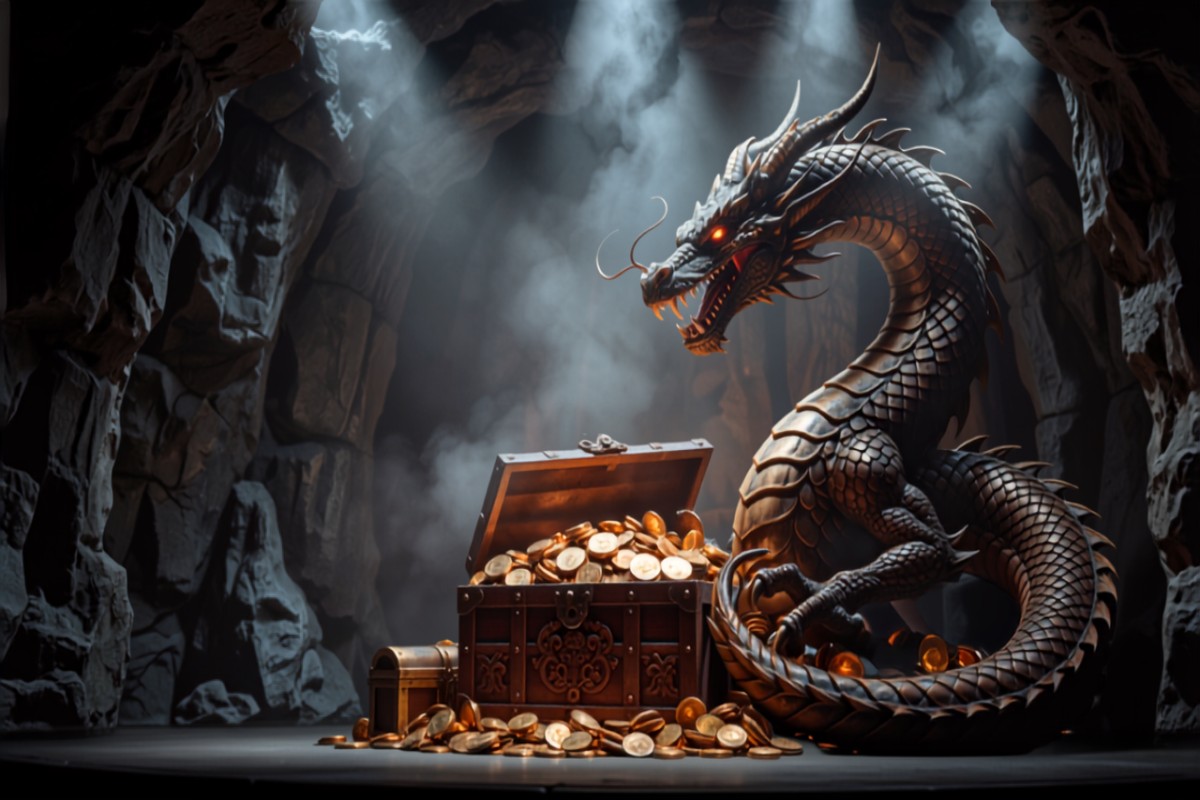
The cycle's central hero, Siegfried, unites traits of the Germanic Siegfried and the Norse Sigurd: he reforges his father's broken sword, slays the dragon Fafner, gains the ability to understand birds' speech by tasting its blood, and awakens the valkyrie Brünnhilde with a kiss through a ring of fire. Wagner uses these recognizable mythological motifs almost unchanged, but embeds them within a sweeping philosophical drama about the nature of power and love.
The Valkyries and Wotan: Gods as Tragic Figures
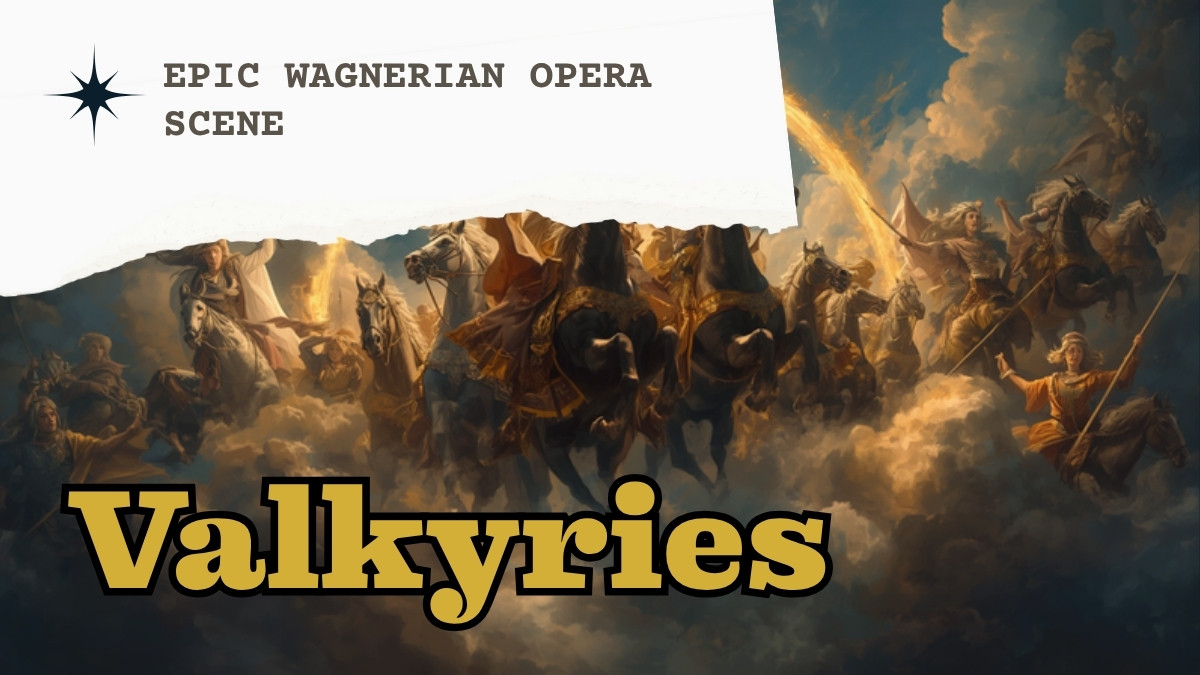
Wagner's Wotan (the Germanic name for Odin) is not an abstract supreme god but a deeply tragic figure, bound by contracts he himself violates and forced to watch the twilight of his own power. Die Walküre, which gave the world the famous "Ride of the Valkyries," reveals the conflict between divine law and parental love through the story of Brünnhilde, punished by her father for disobedience.
Götterdämmerung: Wagner's Ragnarök
The cycle's final opera—Götterdämmerung, a direct translation of the Norse concept of Ragnarök—concludes the story of the cursed ring with universal catastrophe: Valhalla is engulfed in flame, the gods perish, and the ring returns to the Rhinemaidens from whom it was stolen. The plot's circular structure—from the theft of gold from nature to its return through total destruction—directly mirrors the cyclical cosmology characteristic of Norse myths of the world's end and rebirth.
Musical Innovation and Mythological Unity
Wagner developed a system of leitmotifs—short musical phrases attached to specific characters, objects, and ideas (the ring motif, the sword motif, the curse motif)—that interweave throughout all four operas. This device creates a musical equivalent of mythological interconnectedness: just as characters' fates in myth are intertwined through shared symbols and prophecies, the cycle's score physically binds together the entire fifteen-hour epic.
Staging Tradition and Directorial Interpretations
Over a century and a half of the cycle's existence, a rich tradition of staging interpretations of the Ring has developed—visually divergent yet leaving Wagner's score unchanged. Bayreuth productions, starting with Patrice Chéreau's famous "centennial" 1976 version, regularly relocate the action from an archaic mythological setting to an industrial or overtly modern context, reading the tale of cursed gold as a parable about capitalism and nature's destruction by human greed.
This staging flexibility is itself telling: the myth of the ring of power proved a sufficiently universal archetypal framework to hold widely different historical anxieties—from 19th-century industrialization to 21st-century ecological crisis—while retaining a recognizable Norse-Germanic mythological foundation as the narrative's load-bearing structure.
Frequently Asked Questions
What sources is the Ring of the Nibelung based on?
Wagner synthesized material from the medieval Germanic Nibelungenlied and the Norse Poetic Edda together with the Völsunga Saga, creating his own version of the myth from them.
What does the title Götterdämmerung mean?
The German Götterdämmerung is a direct equivalent of the Norse concept of Ragnarök, the end of the world and the death of the gods in Northern mythology.
How long does the entire cycle take to perform?
A full performance of all four operas takes roughly fifteen hours of stage time, usually spread across four evenings.
Similar articles
The Jungian Shadow Archetype in Mythology
How Carl Jung's psychoanalytic concept explains doubles, demons, and monsters across the world's mythologies
Joyce's Ulysses as a 20th-Century Myth
How a single day of Dublin life became a structural double of Homer's Odyssey
Percy Jackson: Adapting Greek Myth for Teen Readers
How Rick Riordan's series turned the Olympian pantheon into a world of modern teenage demigods