Percy Jackson: Adapting Greek Myth for Teen Readers
Published: 8/27/2026
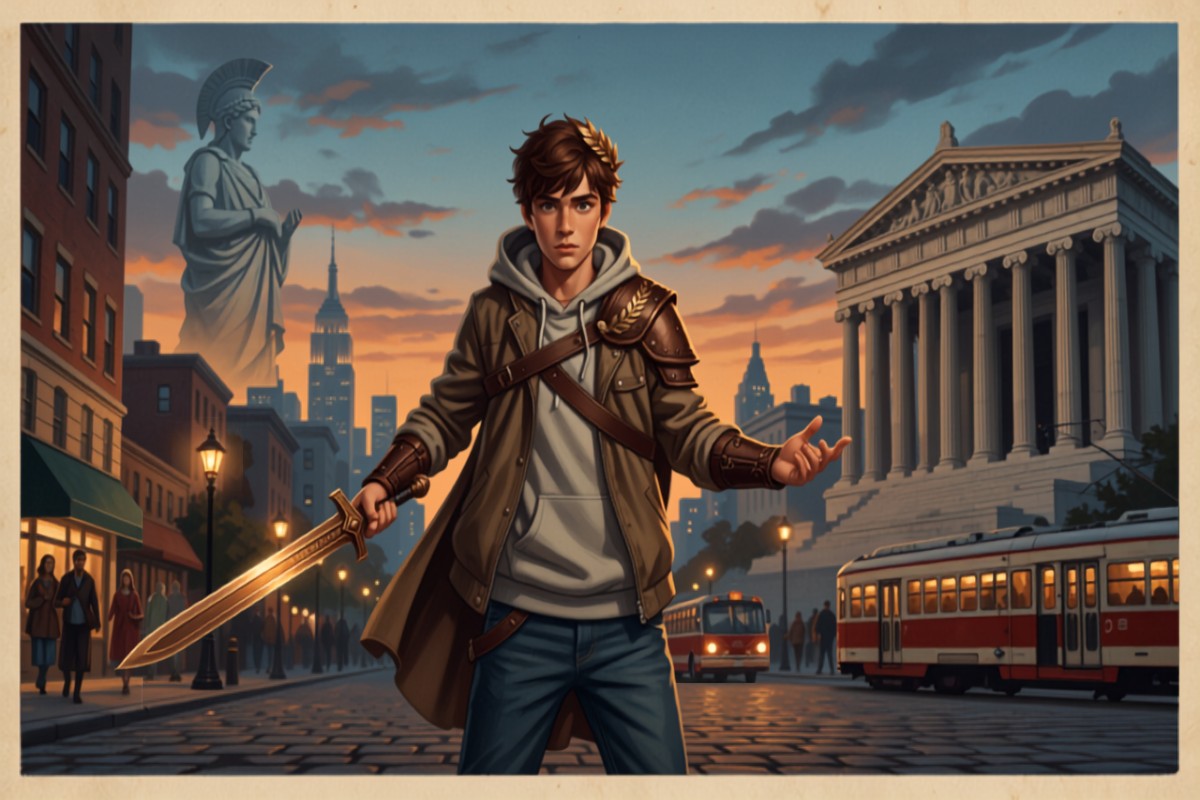
Quick answer: Rick Riordan's Percy Jackson and the Olympians series (since 2005) transplants the Greek gods and their demigod children into contemporary America. The series' central device is literalizing metaphor: the gods exist not in the past but right now, still father mortal children, and a summer camp becomes the place where demigods learn to master their divine nature.
The Core Premise: The Gods Never Left
The series' key assumption is that the Olympian gods are literally immortal and continue to exist in the modern world, relocating along with the center of Western civilization (first Greece, then Rome, now the United States). This clever device removes the need to explain anachronism: Zeus, Poseidon, and Athena act in the 21st century because they never stopped acting.
Children born from unions of gods and mortals—demigods—are born regularly even today, giving the series an endless source of new heroes and letting teen readers literally imagine themselves as a god's offspring.
Camp Half-Blood as a Mythological Identity Test
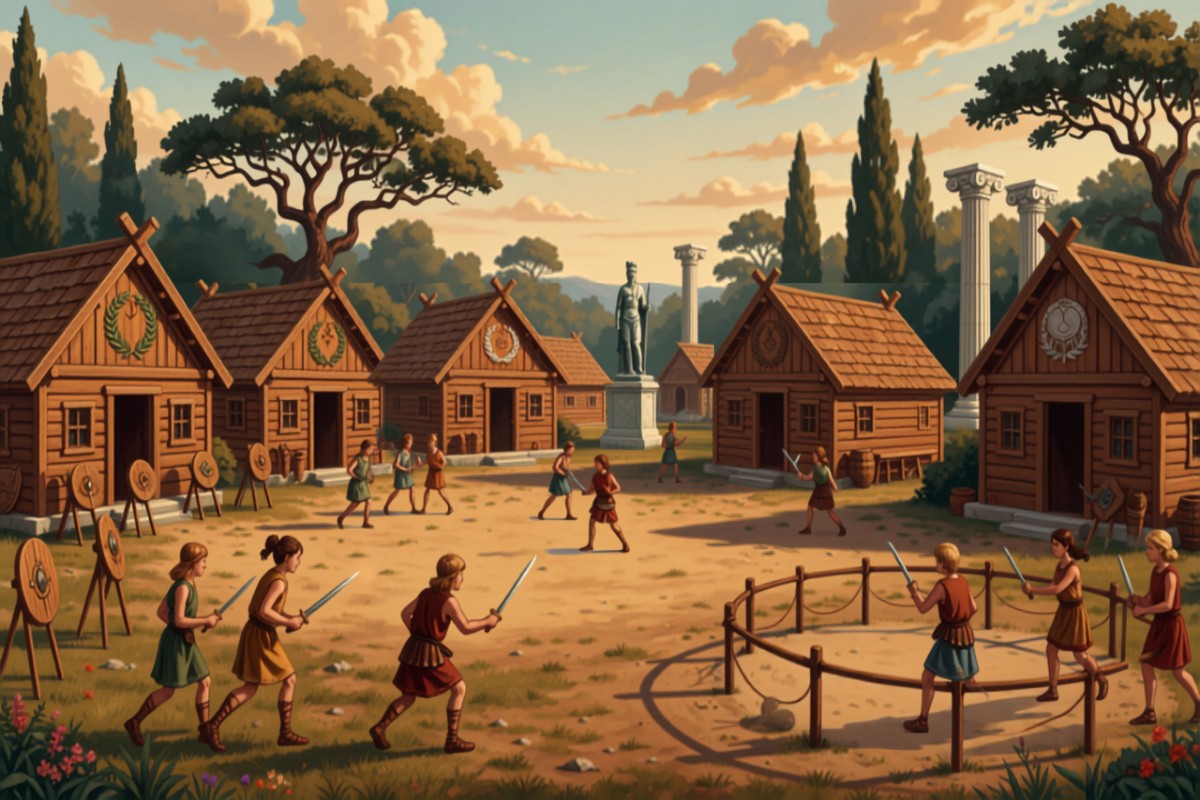
The series' central location is Camp Half-Blood, where demigods go to grow up safely away from monsters. Sorting into cabins, each corresponding to one of the Olympians, functions as a game mechanic of self-identification: young readers project themselves onto a specific patron god, structurally similar to identifying with a zodiac sign or a Hogwarts house.
Percy Jackson as a Reference to the Hero Archetype
The protagonist's very name is a direct reference to Perseus, slayer of the Gorgon Medusa. Riordan builds the parallels not literally but structurally: like his mythological namesake, Percy Jackson is the son of an Olympian (Poseidon, in his case) who must prove his worth through trials. This is the classic hero's journey, adapted into the language of young adult fiction.
Pedagogical Function: Myth as a Textbook Through Narrative
A notable feature of the series is its conscious educational function. Many details of Greek mythology—the gods' genealogy, the symbolism of their attributes, minor characters like the centaur Chiron or Mr. D (Dionysus)—are rendered accurately and respectfully, wrapped in an adventure plot. Teachers and librarians regularly cite Riordan's books as an effective tool for engaging teens with classical mythology.
Legacy: From Books to Franchise
Percy Jackson's success spawned a genre wave of young adult mythological adaptations and led to the expansion of Riordan's own universe—series about Egyptian and Norse mythology by the same author, plus film and Disney+ series adaptations. The formula of "ancient myth plus an outsider teen discovering their true nature" became one of the most durable in contemporary young adult literature.
Female Characters and Rethinking Gender Roles
Special attention should be paid to how Riordan handles female characters within the mythological framework. Annabeth Chase, daughter of Athena, is not a decorative companion to the hero but the team's strategic mind—a direct continuation of Athena's own function as goddess of wise, tactical war as opposed to Ares' blind fury. This choice shows that literalizing myth can also serve as a tool for a more modern, less patriarchal reading of archaic material, without sacrificing the source's recognizability.
Other female figures of the pantheon are reimagined similarly: Artemis in the series surrounds herself with an all-female band of hunters, underscoring her mythological independence from male deities, but framed within contemporary conversations about autonomy and collective female strength.
Frequently Asked Questions
How accurately does the series follow Greek myth?
Riordan preserves the gods' precise genealogy, symbolism, and minor characters, but adds an original modern plot and adventures absent from the original sources.
Why is the hero's name a reference to Perseus?
It's a deliberate parallel: both heroes are sons of an Olympian god who prove their right to be called heroes through a series of trials—the classic hero's journey.
Are the books used in schools?
Yes, teachers often recommend the series as a way to interest teens in classical mythology through engaging storytelling.
Similar articles

The Jungian Shadow Archetype in Mythology
How Carl Jung's psychoanalytic concept explains doubles, demons, and monsters across the world's mythologies
Wagner's Ring Cycle: Myth as Opera
How Richard Wagner's four operas reassembled Germanic-Norse myth into a unified epic of gold, power, and the twilight of the gods
Joyce's Ulysses as a 20th-Century Myth
How a single day of Dublin life became a structural double of Homer's Odyssey