God of War (2018): Reimagining Norse Mythology
Published: 8/26/2026
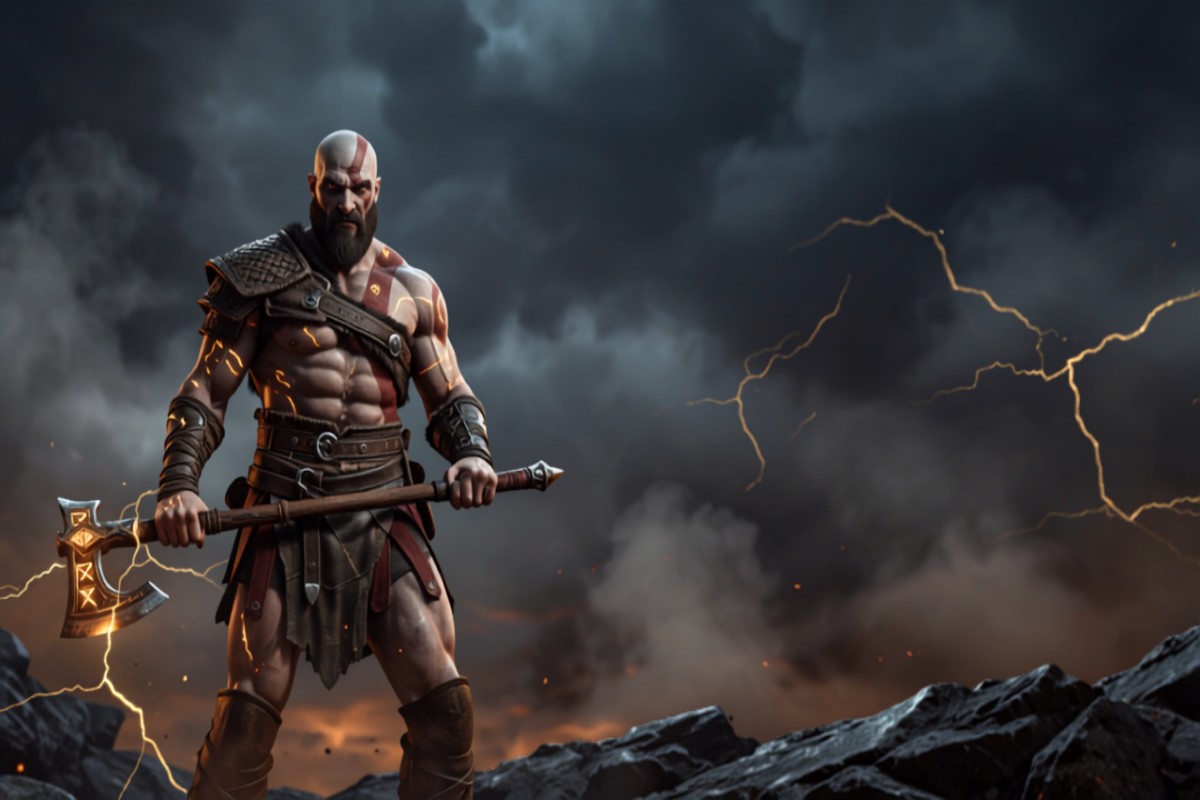
Quick answer: God of War 2018 radically shifted the series' setting from Greek to Norse mythology, transforming Kratos from a reckless avenger into an aging father seeking redemption. The game takes creative liberties with its source material, but does so deliberately, weaving mythological details into a largely original story about the coming Ragnarök.
From Olympus to Midgard: Why Change Pantheons
After three games in which Kratos systematically killed nearly the entire Greek pantheon, Santa Monica Studio faced a practical problem: there was no one left to fight. The solution—a complete setting change—turned out to be more than a marketing gimmick; it became a way to tell a fundamentally different story. Norse mythology, with its emphasis on the inevitability of fate (Ragnarök is foretold and unavoidable), fit perfectly with the game's new theme: not revenge, but a father's attempt to prepare his son for a future that cannot be prevented.
The setting change also let the writers speak to players in a mythological language less worn out by pop culture at the time than Greek myth. Odin, Thor, and Loki were familiar to audiences mostly through Marvel films, which themselves heavily simplified and altered the source material—leaving the developers room for their own, more source-faithful interpretation.
Kratos as an Outsider in a Foreign Pantheon
A key narrative decision was making Kratos not belong to the Norse world at all. He is a Greek, an outsider who arrived in Midgard after the events of the previous games, and this outsider status lets the story comment on Norse mythology from the outside without claiming to fully or accurately reproduce it. Characters regularly react with surprise to Kratos' behavior, and he himself occasionally scoffs at Northern customs—a device that both excuses inaccuracies and works as a meta-commentary on cultural collision.
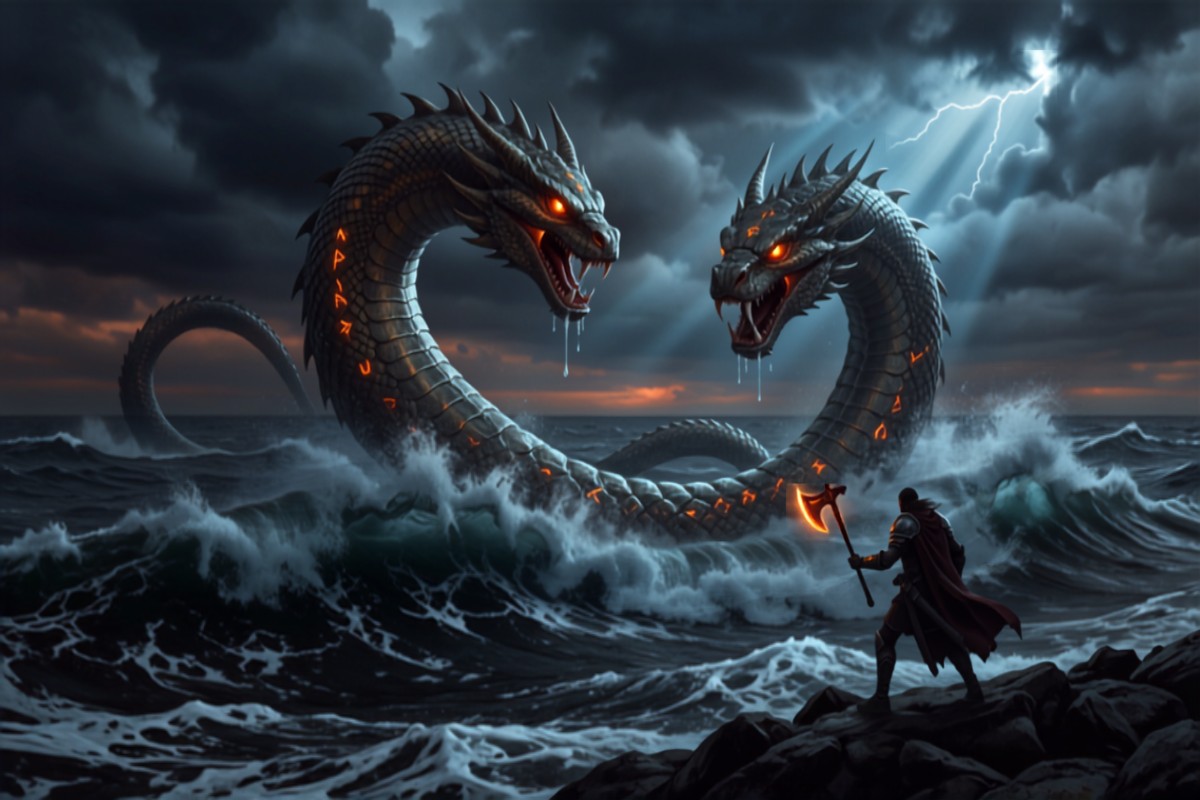
Local Gods: Accuracy and Liberties
The developers treated secondary characters with varying degrees of fidelity. Mimir, the talking severed head, largely retains his mythological function as advisor and keeper of knowledge. Baldur, by contrast, is radically reimagined: in the game he is a mad berserker obsessed with feeling pain, since he is invulnerable to everything except mistletoe—a direct but heavily expanded interpretation of the myth of Baldur's single vulnerability.
Freya in the game is not simply a goddess of fertility and love but a powerful valkyrie and Baldur's mother, tying disparate mythological threads into a unified storyline absent from the original sources but logically derived from them.
Odin as the Hidden Antagonist
Odin, the chief god of the Norse pantheon, never physically appears in the 2018 game, yet his presence looms over the entire story through messages, traps, and other characters' references. This choice reflects Odin's mythological role as a manipulator and hoarder of knowledge at any cost, but shifts the emphasis from his wisdom to his ruthlessness—an interpretation more characteristic of modern attitudes toward ambiguous authority figures than of the archaic text of the Eddas.
Ragnarök as the Saga's Engine
The inevitability of Ragnarök—the end of the world and the death of the gods—became not merely backdrop but the structural principle of the entire saga. Unlike the Greek portion of the series, where Kratos acted reactively, avenging the past, the Norse duology is built around preparing for a foretold future. This shift from revenge to acceptance of fate is one of the reboot's most successful choices, drawing directly on the fatalistic philosophy of Norse myth.
Mythological Accuracy vs. Dramatic Necessity
Santa Monica openly acknowledged sacrificing accuracy for drama where necessary. Nevertheless, the game became many Western players' first systematic introduction to Norse mythology beyond Marvel—and in that sense served an educational function, even filtered through fiction. References to runes, the nine realms, and the structure of the cosmos are handled with notable respect for the source material, even where plot details are entirely invented.
Frequently Asked Questions
How accurately does God of War 2018 follow Norse mythology?
The game freely reimagines relationships between characters and adds original storylines, but preserves recognizable archetypes, names, and the overall cosmology (nine realms, the inevitability of Ragnarök) of Norse myth.
Why doesn't Odin appear in person in the 2018 game?
The developers deliberately kept Odin offscreen to heighten the sense of his manipulative, omnipresent influence—a device echoing his mythological role as a hidden strategist.
How does the Norse duology differ in spirit from the Greek portion of the series?
The Greek games revolve around Kratos' revenge; the Norse games revolve around accepting inevitable fate and preparing a son for the future, directly reflecting the fatalistic philosophy of Ragnarök myths.
Similar articles
Hades: Playing as the God of the Underworld
How Supergiant Games' roguelike turned the Greek pantheon into a cast of characters and the underworld into a playground
Troy (2004): Mythology Versus History
How the Hollywood adaptation removed the gods from the Iliad, and what myth gained and lost as a result
300: The Mythologizing of History
How Frank Miller's comic and its film adaptation turned the real Battle of Thermopylae into a modern myth of heroism