300: The Mythologizing of History
Published: 8/26/2026
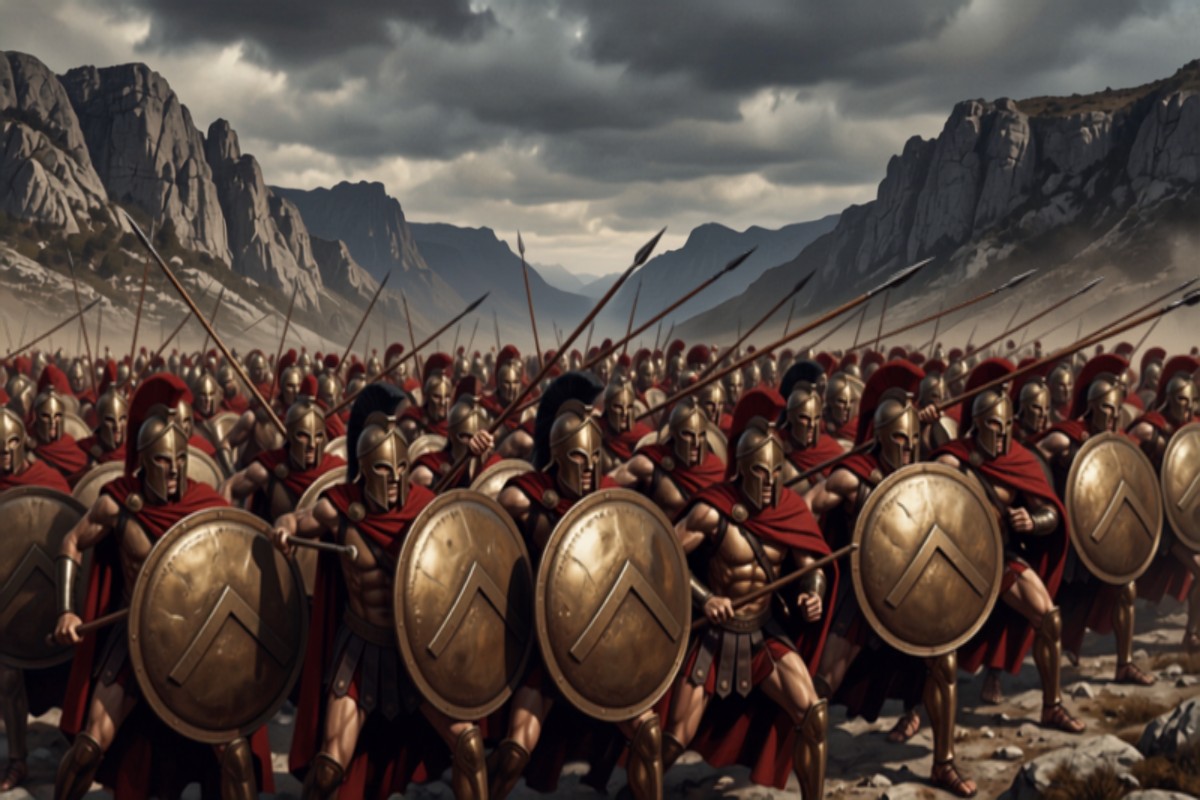
Quick answer: The film 300 (2006), based on Frank Miller's graphic novel, tells the story of a real historical event—the Battle of Thermopylae in 480 BCE—but presents it in such a stylized, hyperbolic way that the history itself effectively becomes a new myth. This is a rare case where a modern work doesn't adapt an ancient myth, but mythologizes history in real time.
The Real Battle of Thermopylae
The film is grounded in historical fact: in 480 BCE, Spartan King Leonidas I led a combined Greek force (not merely 300 Spartans, as the film shows, but several thousand warriors from various city-states) that held off the vast army of Persian King Xerxes I for several days in the narrow mountain pass of Thermopylae. The Persians' numerical advantage was overwhelming; the Greeks were eventually surrounded and most defenders died, but their resistance bought the rest of Greece time to prepare for further war.
From History to Legend: The Greek Tradition of Mythologizing
The mythologizing of Thermopylae didn't begin with Frank Miller—it began in antiquity itself. Herodotus, the ancient Greek historian and our primary source for the battle, already wrote it as a story of near-superhuman heroism, including Leonidas's famous (likely apocryphal) reply to the Persian envoy who demanded the Greeks lay down their weapons: "Come and take them." Miller's adaptation thus continues a centuries-old tradition of turning this historical episode into a moral and patriotic myth, rather than inventing that tradition from scratch.
Hyperbole as Artistic Method
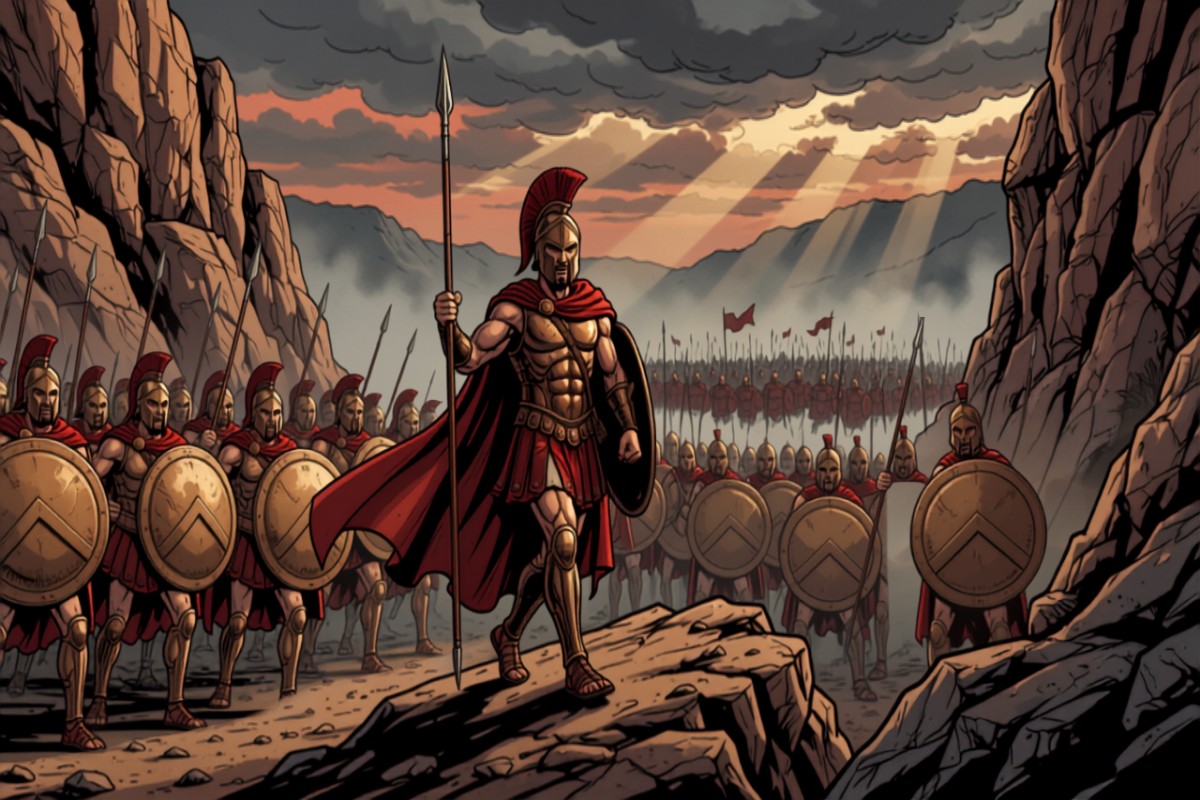
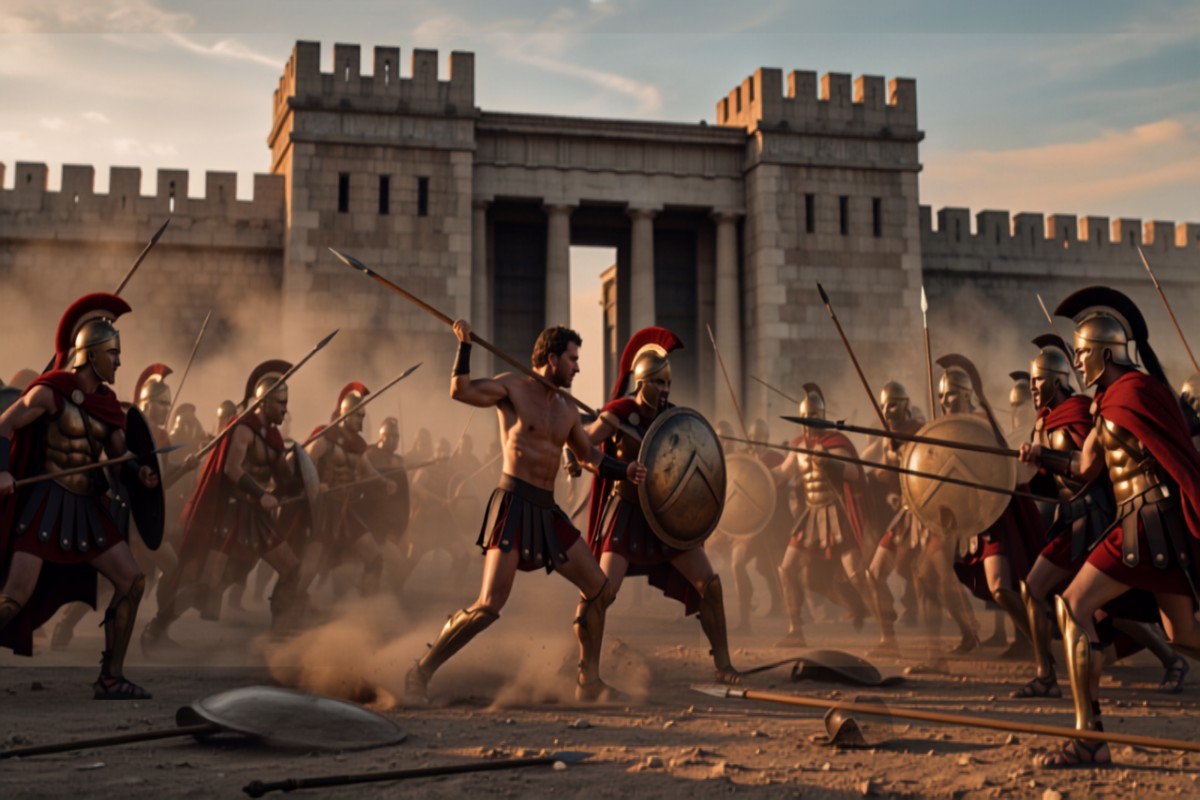
The film's style is deliberately unhistorical: hypertrophied musculature, minimal armor (in reality Spartan hoplites wore full heavy armor, not just capes), fantastical creatures like war rhinos, and a gigantic Xerxes portrayed almost as a deity. Director Zack Snyder explained these choices as visualizing not literal fact but a subjective, legendary retelling—a myth of how this story lived on in the memory of later generations of Spartans, rather than a documentary reconstruction.
Ideological Mythology: Spartans as Archetype
The film is built around an idealized archetype of the Spartan warrior—a free man willing to die for his homeland against a despotic Eastern tyrant. This opposition of "free Greeks versus Eastern despotism" itself traces back to ancient Greek propaganda and was later repurposed in European culture as a foundational myth of the birth of the Western idea of freedom—a myth modern historians consider an excessive simplification of the actual political relationships of the ancient world.
Critique: Where Myth Diverges from History Here
Historians note that the film significantly distorts the real proportions of the event: the Persian army appears alien-monstrous, whereas historically it was a highly developed and organized state; Spartan society was built on the slave labor of helots, which the film entirely ignores to preserve the purity of the heroic myth. This illustrates the general mechanism of mythologizing: reality gets simplified into a contrasting moral scheme convenient for transmitting particular values.
Frequently Asked Questions
Were there exactly 300 Spartans at the Battle of Thermopylae?
No, the 300 Spartan warriors were the core of a much larger Greek force numbering several thousand from various city-states; the figure "300" became symbolic through ancient tradition rather than reflecting the actual number of defenders.
How historically accurate is the film 300?
The film is accurate in the basic outline of events (location, outcome, defenders' heroism) but deliberately exaggerates visual details, armor, and the enemy's appearance to create a legendary rather than documentary narrative.
Who first mythologized the Battle of Thermopylae?
The mythologizing began in antiquity, primarily with the historian Herodotus, who described the events as a story of heroism—long before Frank Miller's graphic novel and Zack Snyder's film.
Similar articles
God of War (2018): Reimagining Norse Mythology
How the acclaimed reboot moved Kratos from the Greek pantheon into the world of Odin, Thor, and Jormungand
Hades: Playing as the God of the Underworld
How Supergiant Games' roguelike turned the Greek pantheon into a cast of characters and the underworld into a playground
Troy (2004): Mythology Versus History
How the Hollywood adaptation removed the gods from the Iliad, and what myth gained and lost as a result