Cu Chulainn: The Irish Hero and His Battle Fury
Published: 8/26/2026
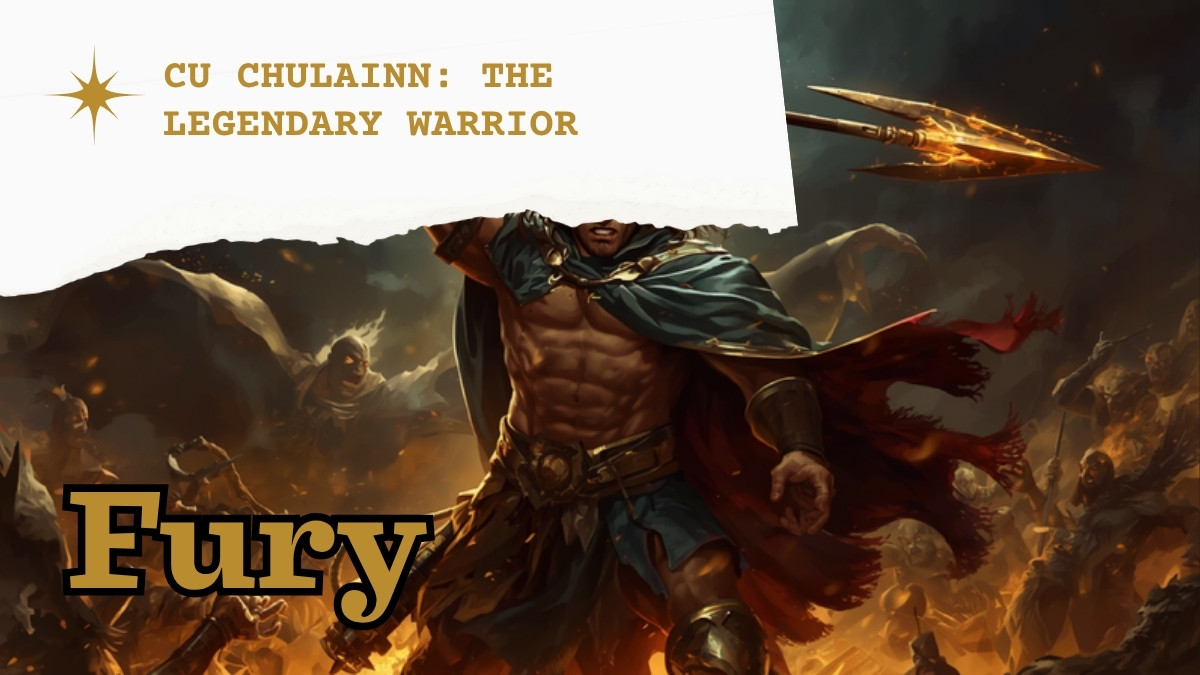
Quick answer: Cu Chulainn is the greatest hero of Irish mythology, the central figure of the Ulster Cycle of tales and son of the god Lugh. He was famed for his superhuman battle fury known as the warp-spasm, single-handedly defended the province of Ulster from invasion, and died young, tying himself to a standing stone so he could die on his feet.
Birth and true name
At birth the hero was named Setanta. According to legend, his mother was Deichtine, sister of King Conchobar of Ulster, and his father was Lugh, god of light and craftsmanship, though some versions name Conchobar himself as the father. Even as a child, Setanta displayed extraordinary strength and courage, far surpassing his peers in the martial games of the court.
How Setanta became Cu Chulainn
The hero earned his famous name — Cu Chulainn, "the Hound of Culann" — as a child, under tragic circumstances. Arriving late to a feast hosted by the smith Culann, the boy was attacked by his host's ferocious guard dog and killed the animal with his bare hands in self-defense. Filled with remorse, Setanta offered to serve as Culann's guard himself until a replacement pup could be raised, and from then on bore the name Cu Chulainn.
The warp-spasm battle fury
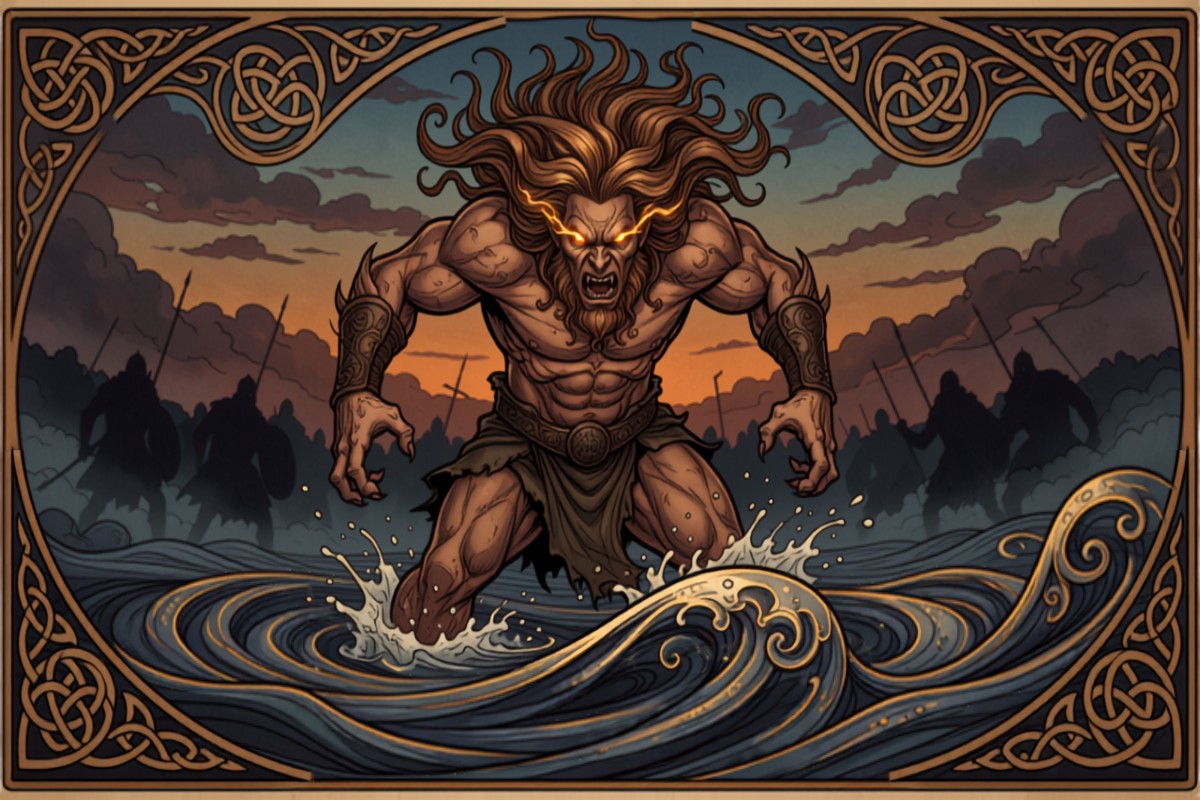
Cu Chulainn's defining trait was his battle transformation known as the warp-spasm, or riastrad. In combat the hero fell into a frenzy: his body twisted and distorted, one eye sank into his skull while the other bulged out as large as a saucer, his hair stood on end, foam poured from his mouth, and a glow — the "hero's light" — appeared above his head. In this state Cu Chulainn became an almost unstoppable killing machine, unable to distinguish friend from foe, so his companions took care to keep a safe distance from him during battle.
The lone defense of Ulster
The central story of the saga known as the Cattle Raid of Cooley tells of a war launched by Queen Medb of Connacht to seize a legendary brown bull. Because of a curse laid by the goddess Macha, all the warriors of Ulster were periodically struck with a weakness resembling labor pains — the only one unaffected by the curse, owing to his divine parentage, was Cu Chulainn. Alone, the young hero held off an invading army for months, challenging enemy warriors to single combat at a ford one after another and wielding his legendary spear, the Gae Bolga.
The death of his sworn brother Ferdiad
One of the saga's most tragic episodes is Cu Chulainn's duel with his foster-brother and fellow student in arms, Ferdiad, whom Queen Medb persuaded through cunning and flattery to fight his childhood friend. The two heroes battled at the ford for three days, each evening exchanging healing herbs and sharing food as a token of old friendship, but on the fourth day Cu Chulainn was forced to use the deadly Gae Bolga and kill Ferdiad, after which he mourned his fallen friend at length, cursing the war that had set them against one another.
Prophecy and heroic death
It was prophesied that Cu Chulainn's life would be short but blazing with unmatched glory — and the hero consciously chose this path. He died in battle against enemies who used magic and tricked him into breaking his geasa, the sacred taboos he was bound to observe. Mortally wounded, Cu Chulainn tied himself to a standing stone with his belt so he could die facing his enemies while standing, and only when the war goddess Morrigan's raven landed on his shoulder did his opponents dare approach, realizing the hero was truly dead.
A place in Irish culture
Cu Chulainn remains a national symbol of Ireland: his statue stands in Dublin's General Post Office in memory of the 1916 Easter Rising, and the image of the hero who died standing has become a metaphor for unbending resistance. The Ulster Cycle, in which Cu Chulainn is the central figure, together with the Welsh Mabinogion, forms the foundation of Celtic mythological tradition, inspiring modern fantasy writers and video game creators, where Cu Chulainn frequently appears as a playable character or an archetype of battle madness.
Frequently asked questions
What is Cu Chulainn's warp-spasm?
The warp-spasm is the hero's battle transformation, during which his body distorted beyond recognition and his strength multiplied enormously; in this state Cu Chulainn could not distinguish enemy from ally and posed a danger to everyone around him.
Why did Cu Chulainn defend Ulster alone?
Because of a curse laid by the goddess Macha, all the adult warriors of Ulster periodically fell into a state resembling labor pains and could not fight; Cu Chulainn, being of half-divine origin, escaped this curse and held the defense alone.
How did Cu Chulainn die?
His enemies tricked the hero into breaking his sacred geasa taboos, stripping him of his magical protection; mortally wounded in battle, Cu Chulainn tied himself to a stone so he could die standing, and his enemies did not dare approach until they saw a raven land on his shoulder.
Similar articles
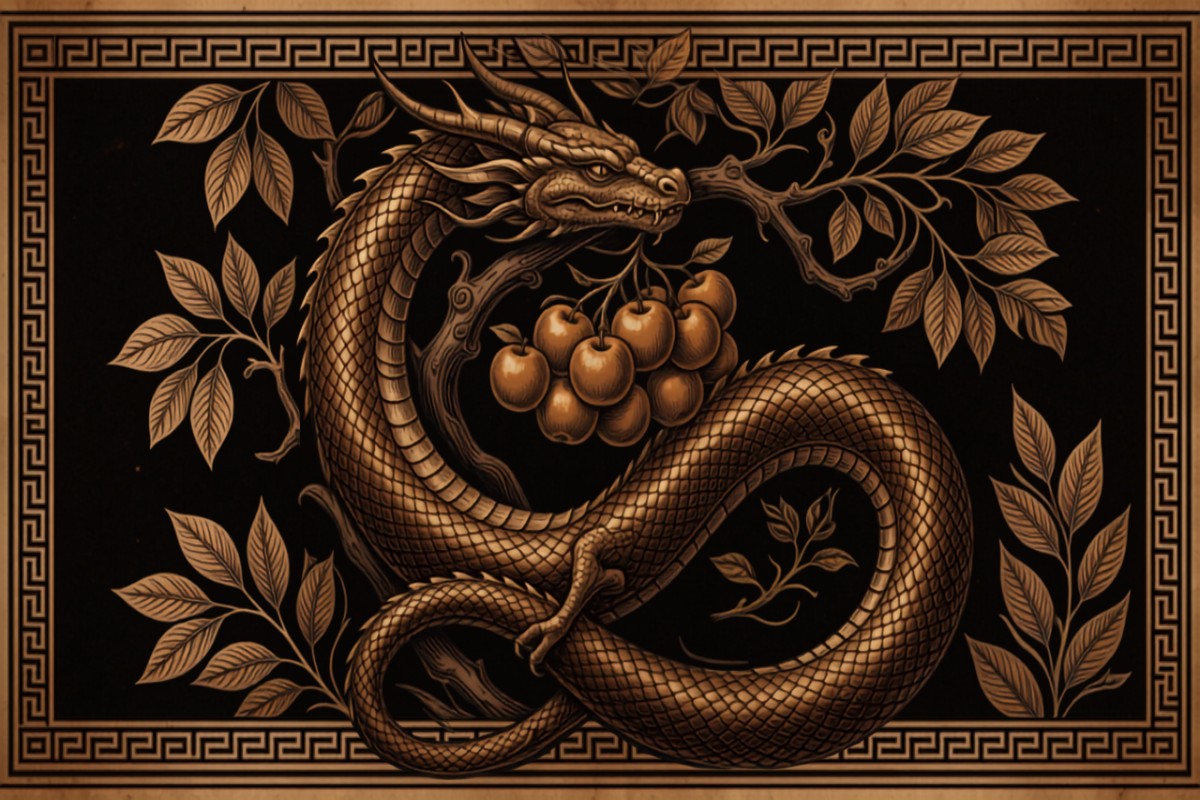
Ladon: The Hundred-Headed Dragon of the Golden Apples
Ladon is a hundred-headed dragon of Greek mythology who guarded the golden apples of the Hesperides, slain by Heracles during his eleventh labor.
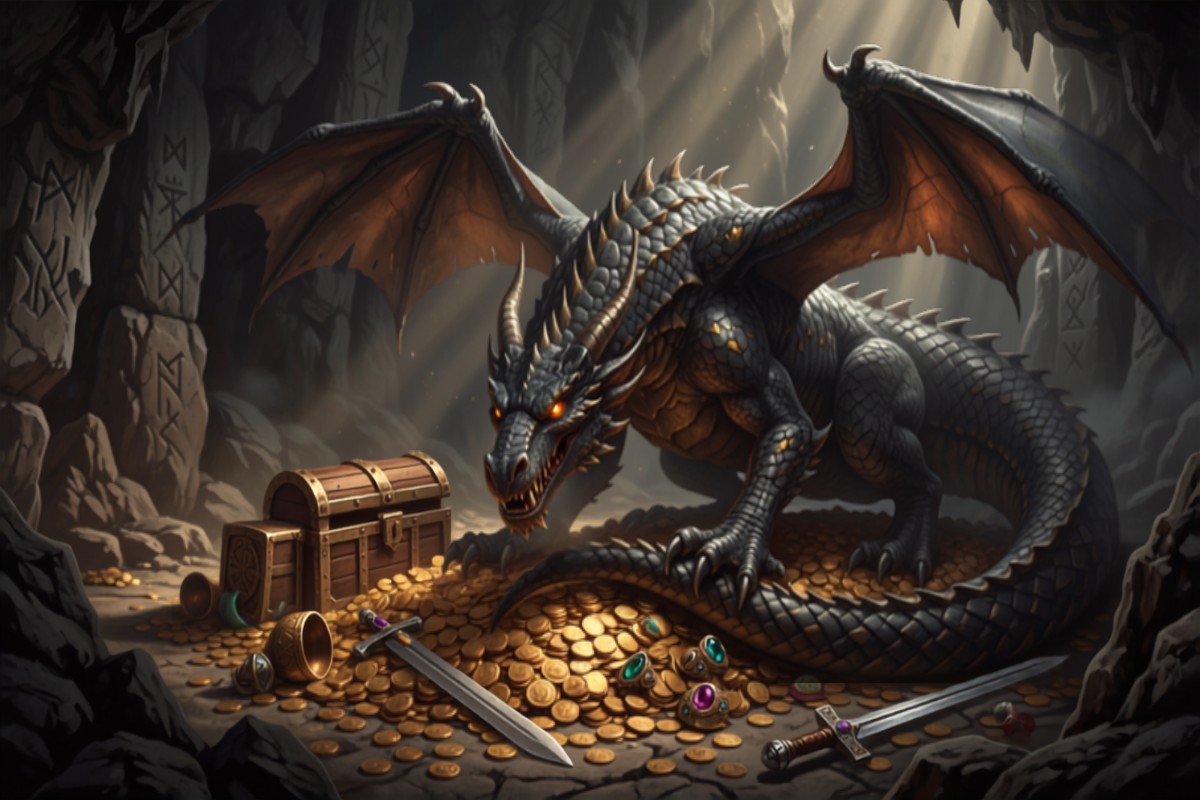
Fafnir: The Dwarf Who Became a Dragon
Fafnir is a figure of Germanic-Norse mythology who transformed into a dragon because of cursed gold and was slain by the hero Sigurd.
The Chimera: Monster of Lion, Goat, and Serpent
The Chimera is a fire-breathing monster of Greek mythology with a lion's body, a goat's head on its back, and a serpent tail, defeated by the hero Bellerophon.