The Chimera: Monster of Lion, Goat, and Serpent
Published: 8/26/2026
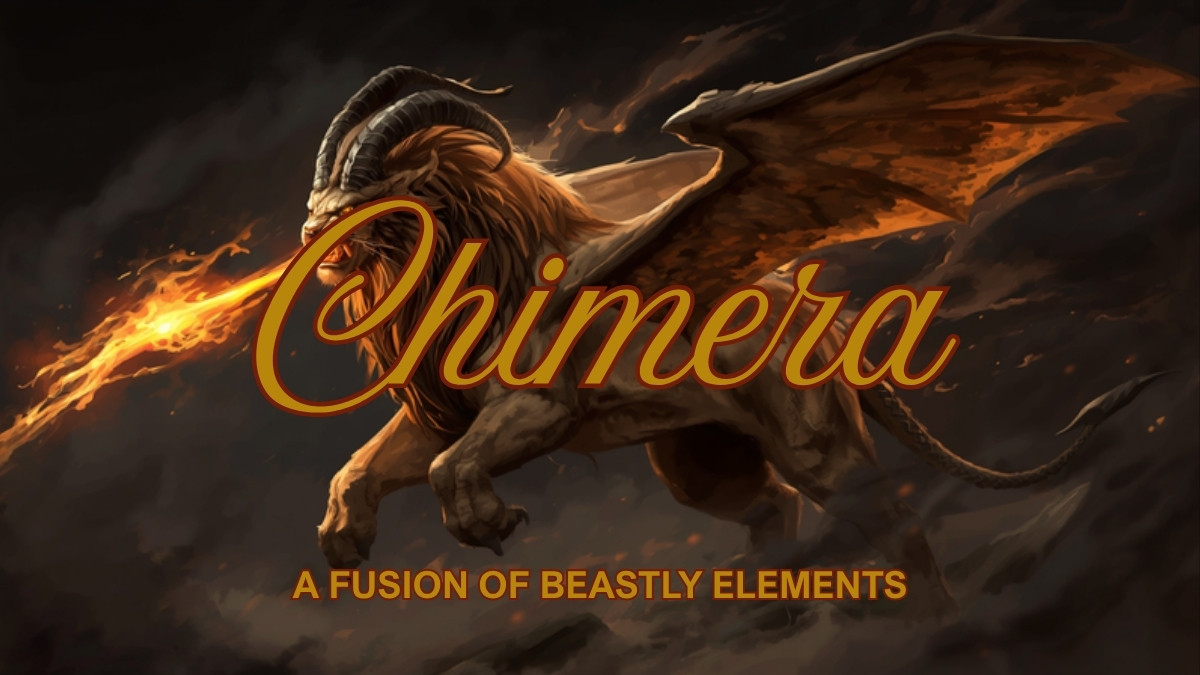
Quick answer: The Chimera is a monstrous hybrid of Greek mythology combining a lion's body, a goat's head growing from its back, and a serpent for a tail, and it could breathe fire. The monster ravaged Lycia until it was defeated by the hero Bellerophon riding the winged horse Pegasus.
Origins of the monstrous hybrid
According to Hesiod, the Chimera was offspring of the monstrous pair Typhon and Echidna, making it kin to other famous monsters of Greek mythology — Cerberus, the Lernaean Hydra, and the Nemean Lion. The very name "Chimera" translates from Greek as "young goat," pointing to the original importance of the goat element in the creature's form, though over time the lion image came to dominate popular perception.
A triple form
The classic description of the Chimera, recorded by Homer in the Iliad, portrays a creature with the front part of a lion, the rear part of a serpent, and a goat's head growing from the middle of its back, while the monster breathed fire. This tripartite structure made the Chimera a symbol of the unnatural mixing of incompatible natures — the ferocity of a predator, the cunning of a reptile, and, oddly enough, the defenselessness of a domestic animal, all combined in one terrifying body.
The devastation of Lycia
The Chimera settled in the mountains of Lycia, a region in Asia Minor, from where it launched devastating raids on the surrounding lands, burning crops and villages with its fiery breath and killing livestock and people. King Iobates of Lycia, unable to deal with the monster himself, sought help from the hero Bellerophon, who had arrived in his lands, secretly hoping the hero would die in the attempt — Iobates had received a letter from his son-in-law, King Proetus of Tiryns, asking him to destroy Bellerophon, who had been falsely accused by Proetus's wife of improper advances.
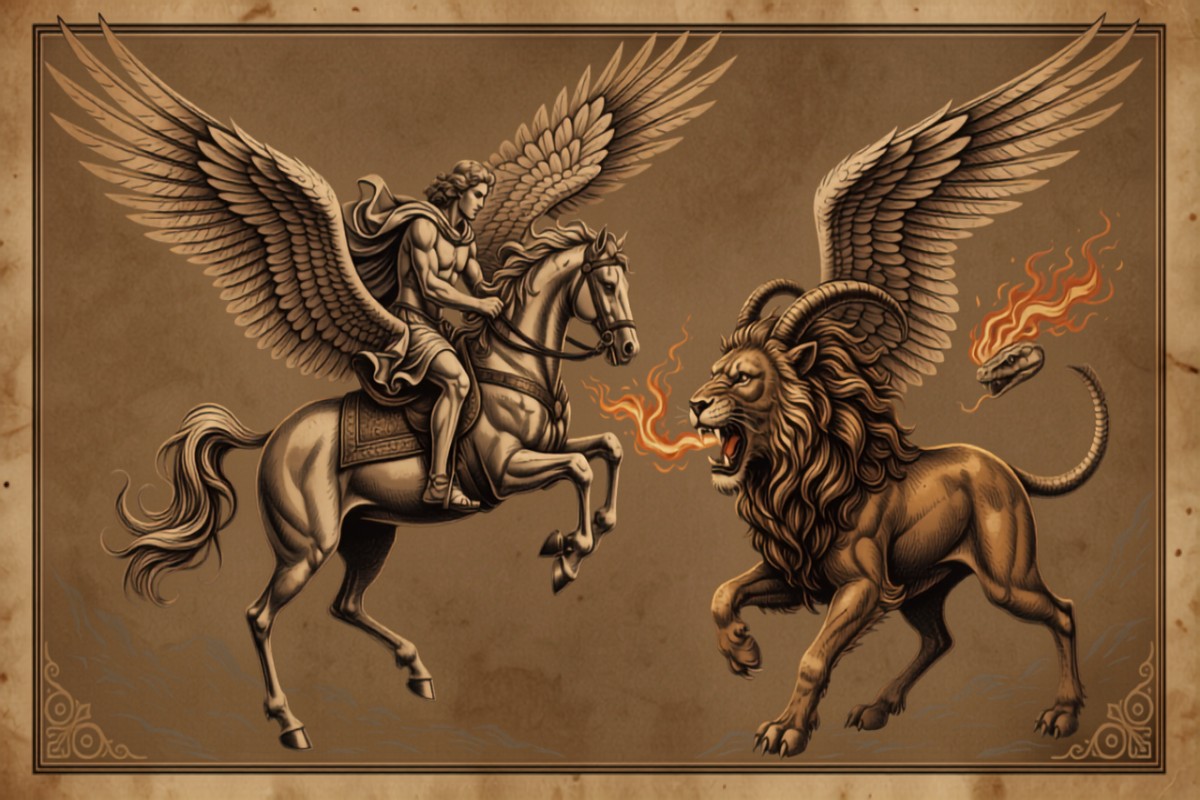
Bellerophon and Pegasus
Before confronting the Chimera, Bellerophon received guidance in a dream from the goddess Athena on how to tame the winged horse Pegasus, born from the blood of Medusa after her death at Perseus's hands. Using a golden bridle given by the goddess, the hero tamed Pegasus and, rising into the air on its back, found himself beyond the reach of the Chimera's fiery breath and claws. From above, Bellerophon struck the monster with arrows, and according to one version of the myth, thrust a spear tipped with lead into its fire-breathing maw, which melted from the heat of the Chimera's breath and killed it from within.
Symbolism and interpretations of the myth
Some ancient and modern scholars have suggested that the Chimera myth may reflect a real natural phenomenon — a volcanic area in Lycia with burning natural gas vents, known as Yanartaş, where spontaneous flames can still be observed on a mountainside today. Such natural "fire-breathing mountains" may have given rise to the legend of a monster spewing fire from the depths of the earth.
The legacy of the term "chimera"
Beyond the mythological image, the word "chimera" entered scientific and everyday language in a figurative sense — denoting something fantastical, unattainable, or an unnatural combination of disparate elements. In biology, the term "chimera" refers to an organism composed of cells with different genetic material, while in everyday speech a "chimera" refers to an unattainable dream or an illusory plan lacking real foundation.
The Chimera in art and culture
The image of the Chimera inspired ancient sculptors and vase painters; the most famous example is the fifth-century BCE Etruscan bronze statue known as the "Chimera of Arezzo." In modern culture the Chimera remains a popular creature in fantasy literature, role-playing games, and video games, where it often appears as a classic boss or magical creature embodying the idea of a dangerous, unnatural mixture of different natures.
Frequently asked questions
Who defeated the Chimera?
The Chimera was defeated by the hero Bellerophon, who flew above the monster on the winged horse Pegasus and struck it with arrows, and according to one version, with a lead-tipped spear that melted in the monster's fiery jaws.
Where does the name "Chimera" come from?
The name comes from a Greek word meaning "young goat," pointing to the importance of the goat component in the creature's original form, although later the lion image came to dominate popular perception.
Was the Chimera related to other mythical monsters?
Yes, according to Hesiod, the Chimera was the offspring of Typhon and Echidna, making it a sibling of such famous monsters as Cerberus, the Lernaean Hydra, and the Nemean Lion.
Similar articles
Ladon: The Hundred-Headed Dragon of the Golden Apples
Ladon is a hundred-headed dragon of Greek mythology who guarded the golden apples of the Hesperides, slain by Heracles during his eleventh labor.

Fafnir: The Dwarf Who Became a Dragon
Fafnir is a figure of Germanic-Norse mythology who transformed into a dragon because of cursed gold and was slain by the hero Sigurd.

Sirens: The Song That Doomed Sailors
Sirens are mythical creatures of Greek mythology whose song lured sailors to deadly rocks. The history of the image, from bird-women to mermaids.